
May 1
DMC3 Interview: Why Experienced Stalkers Are Taking the UK’s Advanced Deer Management Qualification
At the Shooting & Hunting Academy
, the Deer Management Certificate Level 3 (DMC3) continues to gain significant momentum across the UK deer sector. With hundreds of learners now enrolled, DMC3 is increasingly being recognised as one of the most progressive and practical qualifications available for those looking to demonstrate advanced knowledge, field competence, and strategic understanding of modern deer management.
Unlike traditional classroom-focused qualifications, DMC3 combines practical culling experience with strategic thinking, requiring candidates not only to demonstrate field capability but also to produce a real-world deer management plan that reflects sustainable, responsible and professional deer management principles.
Today, we speak with Anthony — an experienced stalker, trainer, Approved Verifier, and author — about his background, his journey through DMC3, and his thoughts on the future of deer management in the UK.
Can you tell us a little about your background in deer stalking and how you first got into it?
Germanic background; summer holiday as an 8-year-old; family link to a German hunter/high seat watching wildlife/the cull of a 3-legged roe deer fascinated me ever since by these beautiful animals and made me want to understand more about them.
My military career involved working in some difficult places. Military skills and fieldcraft are easily transferred into the world of deer management. For example, patrolling, the use of ground camouflage and stealth all equate to stalking, while ambushing equates to high seat work.
I became a member of Defence Deer Management — military training areas with wild deer populations. I started at the bottom as a trainee, progressed to being allowed to cull on my own, became a Beat Manager, and eventually started training beginners and ran the Defence Deer Management for south east England, checking census work, cull plans and training stalkers. I continue to train novice stalkers and am an Approved Verifier for PDS1 and PDS2, including Large Game Meat Hygiene.
In addition, I have written a book aimed primarily at the novice stalker: The Efficient and Effective Deer Stalker – Shortening the Learning Curve with Lessons Learned. The unique selling point is that I mention some of my mistakes made over the past 30 years. Some have said unkindly that I bet it is a big book!!
After many years of stalking, what made you decide to take the step and complete the DMC3 qualification?
I see DMC3 as a challenge of both my skills and knowledge level. For me, it is a milestone where I have confirmed that I am no longer a recreational stalker but a semi-professional deer manager.
DMC3 is a fundamental departure from the standard way in which deer management awards are achieved. It tests both skills and knowledge in an imaginative way.
Years back, I completed an Advanced Deer Managers course through the British Deer Society. It was classroom-based and death by PowerPoint! DMC3 is fundamentally different in that it is both practical — culling 10 animals — and requires the candidate to apply his knowledge to a real-life scenario by writing a deer management plan.
Did you face any challenges during the process, and how did you overcome them?
The private permissions that I have, in addition to access to military training areas, give me access to invasive species and non-invasive species, but not sika. However, I have become an instructor on the DDM Trainees Baseline Course, which now gives me access to sika on the Lulworth tank ranges.
From your perspective as an experienced stalker, what does DMC3 add beyond practical experience alone?
It requires you to think more broadly about the impact of your stalking activities. It is not just about culling humanely.
You have to consider and apply the landowner’s objectives; you have to analyse deer damage on your ground and consider what numbers need to be taken to create the ‘sustainable carrying capacity’, meaning the deer numbers are in harmony with their environment and that limited tree damage is at an acceptable level.
Looking ahead, how do you see the future of deer management in the UK, and what role do qualifications like DMC3 play in that?
With the impetus behind England’s Deer Strategy and the relaxation and ease of getting a night licence, deer numbers should come down. However, deer can see at night as well, and if they are constantly disturbed or shot at, they will move to safer ground or change their movement and feeding routine. Carcass recovery at night can present real problems if the animal runs some considerable distance before collapsing.
I hate to say it, but the potential for accidents will increase. They are happening now but often go unreported if there is no human injury.
I have reservations that all night shooters will bother to register with Natural England for a licence or follow the expected reporting procedure.I hope that I am wrong.
But to answer the specific question about the value of DMC3, it will demonstrate to a landowner with a deer problem that DMC3 proves a level of professional competence in not just shooting deer, but that the individual can deliver a holistic and thoughtful approach to deer management.
Raising Standards Through Practical Competence
Anthony’s journey reflects exactly what DMC3 was designed to achieve — bridging the gap between practical field experience and strategic deer management capability.
As deer management across the UK continues to evolve, qualifications such as DMC3 are helping to establish clearer professional standards, encouraging thoughtful, evidence-based management approaches that balance conservation, land management objectives, public safety, and animal welfare.
For experienced stalkers looking to take the next step in their development, DMC3 represents far more than another certificate. It is a demonstration of practical competence, strategic understanding, and professional credibility within modern deer management.
For experienced stalkers looking to take the next step in their development, DMC3 represents far more than another certificate. It is a demonstration of practical competence, strategic understanding, and professional credibility within modern deer management.
Ready to Take the Next Step in Professional Deer Management?
If you are an experienced deer manager, estate professional, wildlife consultant, or serious deer stalker looking to progress to the highest level of deer management, the Deer Management Certificate Level 3 (DMC3) provides a clear, structured pathway.
Now is the time to raise standards, demonstrate professional competence, and be part of the next generation shaping sustainable deer management in the UK.
You can learn more about the Deer Management Certificate Level 3 HERE
Looking to get into Deer stalking? Enrol today!
Proficient Deer Stalker PDS1 Course
PDS1 is LANTRA and UKRS accredited course delivered by a trusted provider of deer stalker training. The PDS1 is nationally recognised Deer Management course that delivers 'Trained Hunter' status.
Proficient Deer Stalker PDS2 Course
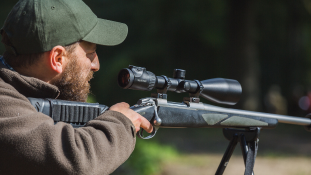
Deer Stalking Qualification that is designed to follow on from the foundation skills achieved during the PDS1. The level 2 course consists of two elements, a taught element delivered online and a practical demonstration of skill by the candidate in the field. Read more
Who we are
The Shooting & Hunting Academy is a UK Registered Learning Provider and LANTRA and UK Rural Skills Approved Training Provider. The academy hosts key accredited courses for those involved in shooting, hunting, the management of wildlife, and the safe and effective dispatch of pests and vermin. The academy also delivers specialist Masterclasses, delivered by leading shooting and environmental experts.